

Your website or web app is the first thing users interact with, and first impressions matter more than ever. That’s why…. Choosing the right Front-end framework makes a lot more difference.
Two names consistently appear in every conversation: React and Vue. They both help you build fast, modern websites. And yes, they often look similar on the surface… but they are not the same.
So the real question is ‘Which one to choose?’
Let’s break down the differences and help you understand when to choose Vue and when to choose React, in the simplest way possible.
React and Vue: A Quick Side-by-Side Comparison
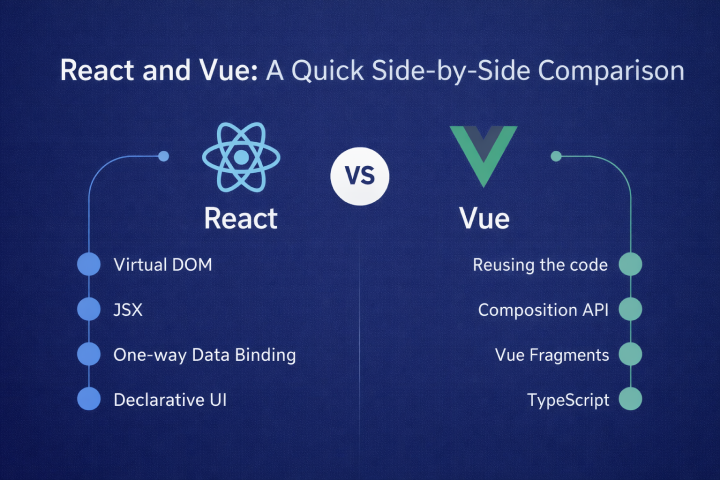
React and Vue power many modern websites, but choosing between them can feel confusing when time is short.
This quick side-by-side comparison provides a clear snapshot of the differences between React and Vue. So you can make decisions faster without having to dig through lengthy articles or jump between websites.
| Sr. No | Feature | React | Vue |
|---|---|---|---|
| 1. | Nature | UI Library | Progressive framework |
| 2. | Backing | Meta (Facebook) | Independent (community/sponsors) |
| 3. | Learning Curve | Medium to steep | Gentle / beginner-friendly |
| 4. | Syntax | JSX (JavaScript XML) | HTML-based templates (default) |
| 5. | State Management | External (Redux, Zustand, etc.) | Built-in (Pinia, Vuex) |
| 6. | Mobile Support | Robust (React Native) | Less mature (NativeScript, Weex) |
| 7. | Bundle Size | Larger (requires many libraries) | Smaller (more features built-in) |
Understanding React and Vue: What’s the Deal?
Before we jump into the Vue vs React comparison, let’s get one thing straight about what we’re actually comparing here.
What is React/ReactJS and Why Everyone’s Talking About It

React was created by Facebook in 2013. It is a tool used to build the user interface of websites, which users can see and interact with.
Mainly used to design screens, buttons, forms, and complete web pages. React works like a smart LEGO box. It gives you basic building blocks, and you can use them to create anything, from small pages to large applications.
React uses JSX, which is just JavaScript mixed with HTML. You write the design and the logic together in one place. If you already know a little HTML and JavaScript, React feels familiar and easy to pick up.
| Pros | Cons |
|---|---|
| Very large ecosystem | Harder for beginners |
| Strong company support | Extra setup work |
| Reusable components | Frequent updates |
| Fast performance | Too many choices |
| Mobile app support |
What is Vue/VueJS and Why Developers Love It

Vue, created by Evan You in 2014, is a progressive JavaScript framework. The word “progressive” here is key, it means you can start small and scale up as needed.
Vue is like that friend who’s super easy to hang out with but can also handle serious conversations when needed.
Vue was designed to be approachable, versatile, and performant. And honestly? It nails all three.
| Pros | Cons |
|---|---|
| Easy to learn | Smaller ecosystem |
| Built-in features | Limited enterprise adoption |
| Fast and lightweight | Fewer job openings |
| Excellent documentation | Too much freedom in big teams |
Vue vs React: What are they used for?
Both Vue.js and React.js are popular tools for building modern websites and web apps. They are updated often, backed by strong communities, and trusted by big companies. Over time, they’ve become faster, more stable, and more flexible.
Where Vue.js Works best:
Vue.js is often used to build single-page applications, but many large companies also use it to add interactive features to their websites.
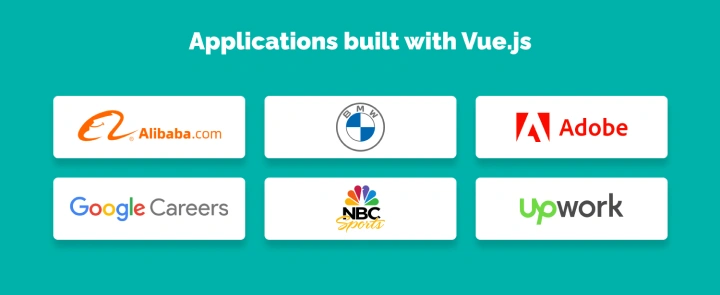
Popular brands using Vue include Trivago, GitLab, Nintendo, and Grammarly.
Vue is a great choice when:
- Many users are active at the same time
- Speed and smooth performance matter
- The app needs to stay simple and clean
Vue works especially well for:
- Blogs and news websites
- Online magazines
- Video blogs
- Simple social media platforms
It loads fast, responds quickly, and doesn’t add extra complexity. For most basic to mid-level projects, Vue does the job without feeling heavy.
Where React Works Best:
React was created by Meta, so it’s no surprise that it powers major social platforms like Facebook, Instagram, WhatsApp, and Twitter.
React is built for apps that are:

- Large and feature-rich
- Highly interactive
- Expected to grow over time
It’s commonly used for:
- Social media platforms
- Community and discussion apps like Reddit and Pinterest
- E-commerce websites with many pages and user actions
Because React is component-based, teams can reuse code easily. It also works well for mobile apps, which makes it a strong choice for businesses building both web and mobile products.
Final Thoughts
Your first frontend app won’t be perfect, and that’s completely fine. What matters is picking either Vue or React and actually starting.
Both tools can build great products. Vue feels simpler and calmer at the start. React gives more freedom as projects grow. Neither choice will ruin your future.
Every good frontend developer has once struggled with buttons not working and screens breaking. The ones who succeeded kept going.