
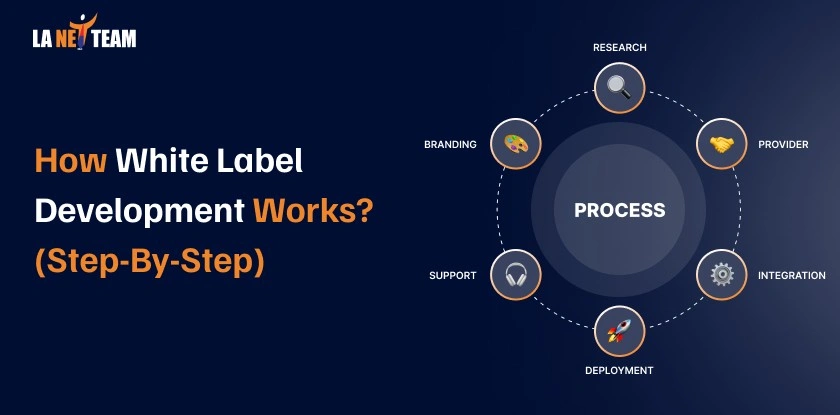
White label development looks easy on the surface. You just need to take a ready product… add your logo… and start selling.
But this is where many people get stuck.
If you don’t understand how white label development actually works step by step, you can end up choosing the wrong platform.
And this model is growing fast. Reports show that white label can cut product launch time by up to 60% compared to building from scratch.
That’s why knowing the process matters. This blog walks you through how white label development works in clear and practical terms.
What is white label Development?
White label development is a business model where one company builds a software product, and another company (you) rebrands it and sells it as its own. This model is very common in SaaS.
You know those store-brand products at the grocery store? Kirkland (Costco), Great Value (Walmart), Amazon Basics? They don’t manufacture those products themselves.
They partner with manufacturers who make high quality products, then put their own label on them.
Why do businesses choose White label Development?
The biggest reason is speed… Building software from scratch can take months and cost a lot of money. Whereas with white label CRM, the product is already built and tested, and you can launch it much faster.
Another big advantage is recurring revenue. Since most white label products are subscription based, you can earn a monthly income from clients instead of one-time payments.
White Label Development Process: A Clear Breakdown
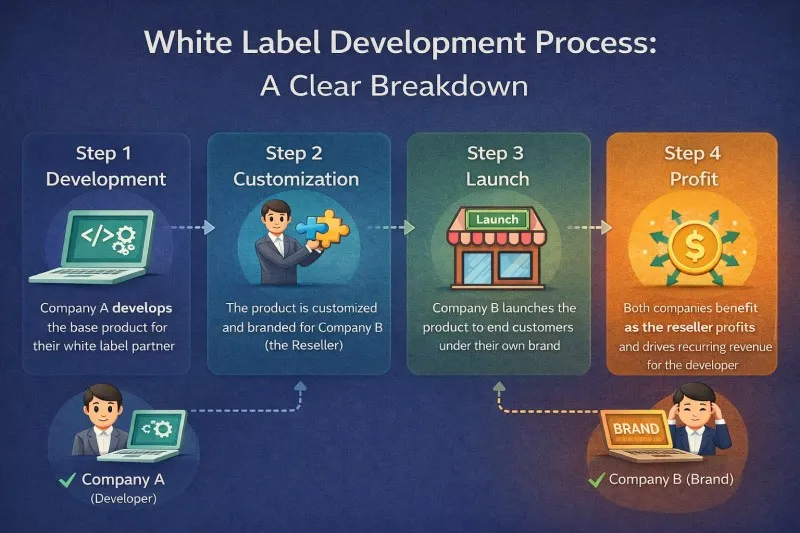
White label development may sound technical, but the process is actually straightforward when you break it down.
Let’s walk through each step properly so you understand how it works in the real world.
Step 1: You partner with a CRM SaaS provider
The first step is to find a software company that built a CRM platform specifically for rebranding and resale. You partner with white label platforms designed from the ground up to have YOUR brand on them.
What to look for in aprovider:
- Comprehensive white label capabilities
- Proven track record
- Reliable infrastructure
- Fair pricing model
- Good support system
Step 2: You rebrand the platform
Once you’ve partnered with a provider, the next step is branding the platform as your own. This is where the transformation happens.
You customize the system by adding:
- Your company logo
- Your brand colors
- Your custom domain
- Your business name
In some cases, you can also customize email templates, dashboards, and user interfaces.
After this step, your clients won’t see the original company’s name anywhere. The software will look and feel like a product built by your company.
Step 3: You create your pricing model
In this step, you decide how you’ll make money. Your provider gives you access to the software at a wholesale cost. And then you decide how to package and price it for your customers.
You might choose to:
- Offer simple monthly subscriptions
- Create multiple pricing tiers
- Bundle the CRM with your marketing services
- Add onboarding or setup fees
This is where strategy matters. As your profit comes from the difference between what you pay the provider and what your customers pay you.
Step 4: The provider runs the backend
While you focus on branding and sales, the provider handles all the technical responsibilities behind the scenes.
They manage:
- Coding and system updates
- Server hosting and maintenance
- Data security and compliance
- Bug fixes and improvements
This one is the biggest advantage of white label development. As neither do you need a technical team nor developers to manage. The technical part is handled by the provider, and you just need to focus on business growth.
Step 5: You focus on growth
Once everything is set up, your main responsibility becomes growth. Since you’re not spending time in building software or fixing technical issues, you can put energy into:
- Marketing campaigns
- Lead Generation
- Sales conversations
- Customer onboarding
- Improving user experience
- Increasing retention
In SaaS, distribution and customer experience matter more than the code itself. White label development gives you the freedom to focus on those areas.
Types of White Label Development
White label is not limited to one type of product. It works across many industries and digital tools. Let’s go through the main types in simple terms.
1. White label SaaS
This is the most common type of white label development.
A SaaS platform is the software that runs online and works on a subscription model. You get this tool from another company and sell it under your brand name.
Example includes:
- CRM Systems
- Project management tools
- Marketing automation platforms
This model is popular among people because it creates recurring revenue without heavy technical work.
2. Mobile Apps
In this model, a company builds a mobile app, and you rebrand it as your own. These apps can be:
- Fitness apps
- Food delivery apps
- Booking apps
- E-commerce apps
- Business tools
Instead of developing an app from zero, you customize the design, logo, and features to match your business. The backend remains the same, but the user sees your brand on the App Store or play store.
3. Web development
Here, a provider creates website templates or website-building systems that you can rebrand and sell. This includes:
- Website builders
- E-commerce website platforms
- Landing page builders
Agencies often use this model to save time and increase efficiency.
4. E-learning platforms
E-learning platforms allow businesses to sell courses or training programs. With white development, you can:
- Launch your own online course platform
- Sell certifications
- Offer internal company training systems
The platform is built by a provider, but it carries your branding. You control the content and pricing, while the provider manages hosting and technical updates.
5. Payment processing
Payment solutions can also be white labeled. In this case, a financial technology company builds the payment system. You integrate and brand it as your own payment gateway or checkout system.
Final Thoughts
White label development is simple when you break it down. Someone else builds the product. You add your brand. Your customers think you built it.
You save months of work, skip technical stress, and still look like a hero in front of clients. Just smart reuse with your logo on top.
Pick the right partner, test before you launch, and keep improving as you grow. White label is not a one-time task. It is more like setting autopilot and steering when needed. And yes, it feels pretty good when it works.