
Every software release goes through testing. And testing decides whether users trust your product… or uninstall it.
Traditional QA takes time. Test cases pile up, bugs slip through, and teams rush at the last minute. Sound familiar?
That’s where AI in software testing steps in.
Instead of testing everything manually, AI helps spot issues faster, automate test cases, and catch bugs before users do. Both manual and automated testing still matter.
But in 2026, teams that use AI test smarter, release faster, and break less. That’s why understanding how AI automates QA is no longer optional, it’s essential.
What is AI in Software Testing?
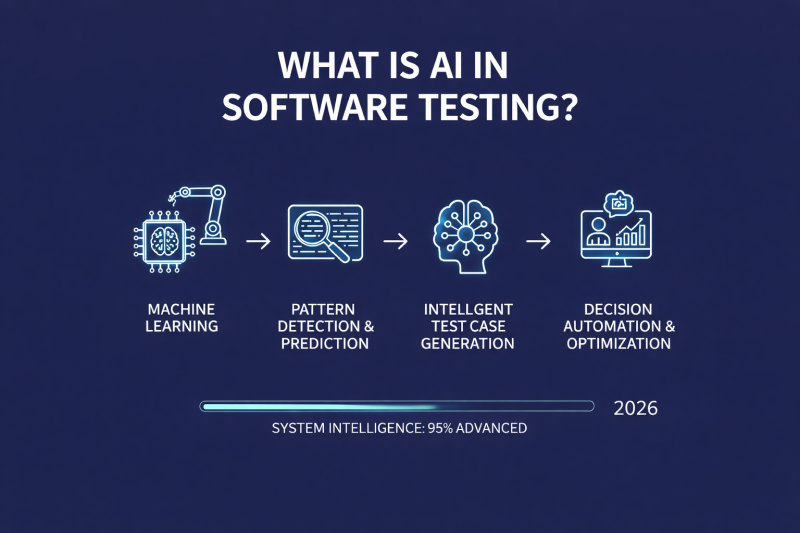
AI in software testing means using artificial intelligence to make testing faster, smarter, and more reliable. Rather than relying only on fixed rules and manually written test cases, AI:
- Learn how your application behaves.
- Detects patterns and risks.
- Fix broken tests when your app changes.
- Find bugs you didn’t even know how to look for.
- Predicts where problems will happen before they do
Why is Traditional testing no longer enough?
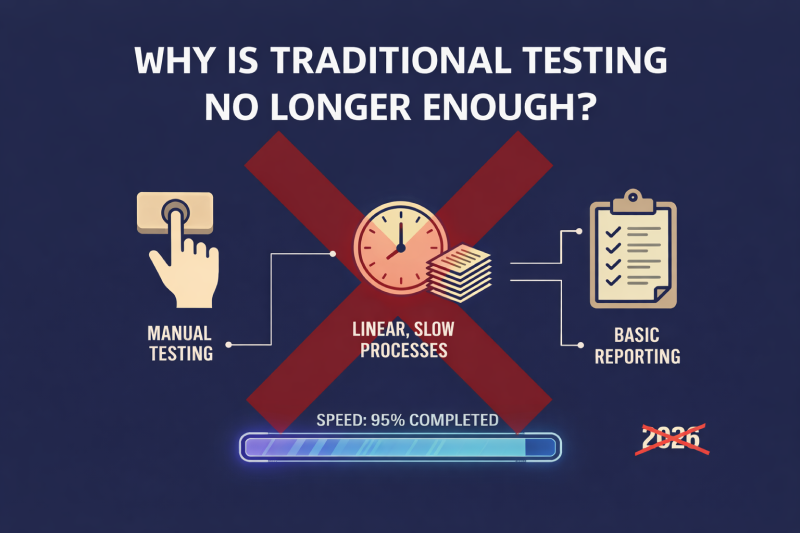
The most common challenge with traditional testing is that it cannot keep up with how software is built today.
Modern applications change fast, release often, and serve thousands of users at once. Older testing methods struggle in this environment.
1. Test Scripts break too often
Traditional automation scripts are fragile. Even a small UI change, a renamed button, or a minor logic update can cause tests to fail.
QA teams then spend hours fixing broken scripts instead of finding real bugs. Over time, test maintenance becomes heavier than actual testing.
2. Testing happens too late
In many teams, testing still starts after development is finished. Bugs are discovered near the release stage, when fixing them is harder and more expensive.
Late bug fixes can delay releases, introduce new issues, and increase pressure on developers and testers.
3. Coverage is limited
Manual testing can only cover a fixed number of scenarios. Testers focus on common paths, but edge cases, unusual inputs, and rare user behaviors are often missed.
As a result, serious issues can reach production and affect real users.
4. QA teams are under constant pressure
Release cycles are shorter than ever. Teams ship updates weekly or even daily. At the same time, users expect perfect performance and zero bugs.
QA teams are expected to test more, faster, and better, often with the same resources.
How to Automate QA Faster in 2026?
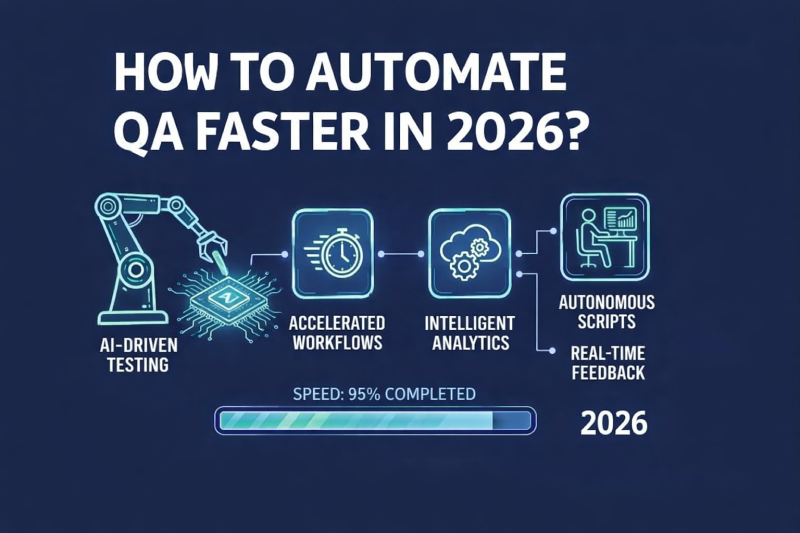
The most practical way to automate QA faster in 2026 is by using AI in software testing step by step. AI is no longer a bonus tool. It is becoming the core of modern QA workflows.
Below is a clear, step-by-step approach that teams can actually follow.
1. Start with Self-writing tests
Old way: Traditional automation needs testers to write every test manually. This takes time and misses edge cases.
AI Way: With AI in software testing, tools learn from your application, user flows, and past tests. They automatically create test cases for common paths and risky areas.
2. Use Self Healing test automation
Old way: Tests depend on fixed element IDs, XPaths, or positions. Even a small UI change, like renaming a button or moving it slightly, causes tests to fail. Testers then spend hours fixing broken scripts.
AI way: AI understands elements based on patterns and behavior. When the UI changes, it updates the test automatically so it continues to work without manual changes.
3. Smart test execution
Old way: All tests are executed every time, even if only a small part of the code changes. This increases execution time, slows down CI pipelines, and delays releases.
AI way: This is where ai helps in analyzing code changes and past failures. It selects and runs only the most relevant tests, saving time while still protecting critical features.
4. Use AI for Bug prediction
Old way: Testing starts only after development is complete. Bugs are found late, often during final testing or after release, making them costly to fix.
AI way: AI reviews commit history, code patterns, and past defect data. It highlights risky areas early so teams can focus testing where bugs are most likely.
5. Automate Test Data Generation
Old way: Test data is created manually or copied from production databases. This approach is slow, unsafe, and rarely covers all possible inputs or edge cases.
AI way: AI generates realistic and secure test data automatically. It covers different user behaviors without exposing real customer information.
6. Add Ai powered Visual testing
Old way: Testers manually compare screens between versions. This is tiring work, and small visual issues like spacing or alignment often go unnoticed.
AI way: AI compares screenshots pixel by pixel and understands visual intent. It flags real UI problems while ignoring harmless changes.
7. Use Natural Language testing
Old way: Test cases must be written in code, which limits testing work to technical team members only. Business teams and product owners cannot contribute directly.
AI way: Tests are written in simple language like normal sentences. AI converts them into working test scripts that run automatically.
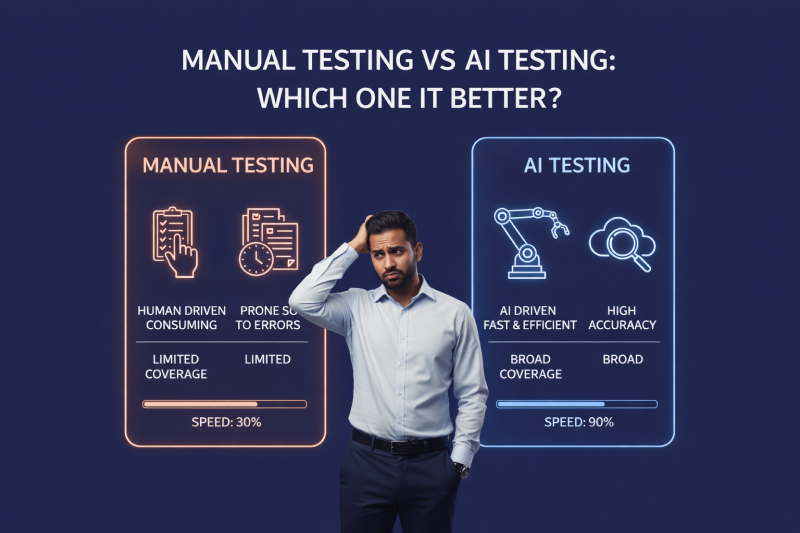
Manual Testing vs Ai Testing: Which one is better?
| Manual Testing | AI Testing |
|---|---|
| Testing is done step by step by humans, so it takes more time, especially for large applications | Tests run automatically and much faster, even across large and complex systems |
| Test coverage is limited because humans cannot test every possible scenario | AI covers more scenarios by learning from user behavior and past test data |
| Every small change in the app requires testers to update test cases manually | AI adjusts tests on its own when the UI or logic changes |
| Mistakes can happen due to fatigue or oversight | AI finds patterns and repeats checks consistently without getting tired |
| Scaling requires more testers, time, and cost | Scaling is easier since AI can run thousands of tests at once |
Which one is better?
Manual testing is still useful for usability checks, user experience, and early exploration. AI testing is better for speed, accuracy, and long-term scaling.
Final Thoughts
AI in software testing is not about replacing QA teams. It is about saving them from clicking the same buttons all day.
When testing is automated the right way, bugs are caught early, releases move faster, and fewer issues sneak into production. Teams spend less time fixing silly mistakes and more time improving the product.
Start with the tests that slow you down the most and let AI handle the boring part.