
Observability vs Monitoring is a topic every DevOps team faces as systems grow.
In the beginning, everything feels simple. Then, more services get added. More components connect. And suddenly, one small issue affects the whole system.
That’s where monitoring and observability come in.
Monitoring tells you what is wrong. It tracks CPU usage, error rates, and uptime. When something crosses a limit, it sends an alert.
Observability tells you why it went wrong. It connects all the data and shows how a request moves through different services. It helps you find the exact point where the problem started.
Observability Vs Monitoring: What do they mean?
At a high level, monitoring and observability both help teams understand system health. But they serve different purposes.
What is Observability?
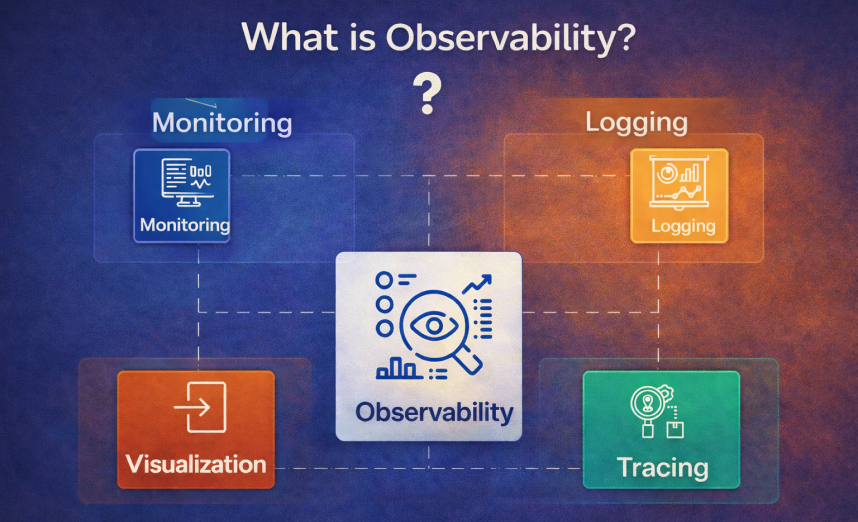
Observability is the ability to understand the internal state of the system based on the external data it produces.
In DevOps, observability lets you see how every component interacts across distributed systems. This means you can inspect the real-time cause and effect of events in your system.
Three pillars of observability
Observability tools & platforms commonly used:
- Metrics: Quantitative data like request counts, error rates, CPU usage
- Logs: Event records with timestamps and context
- Traces: Full request paths that show how requests move through a system and where latency occurs.
What is Monitoring?
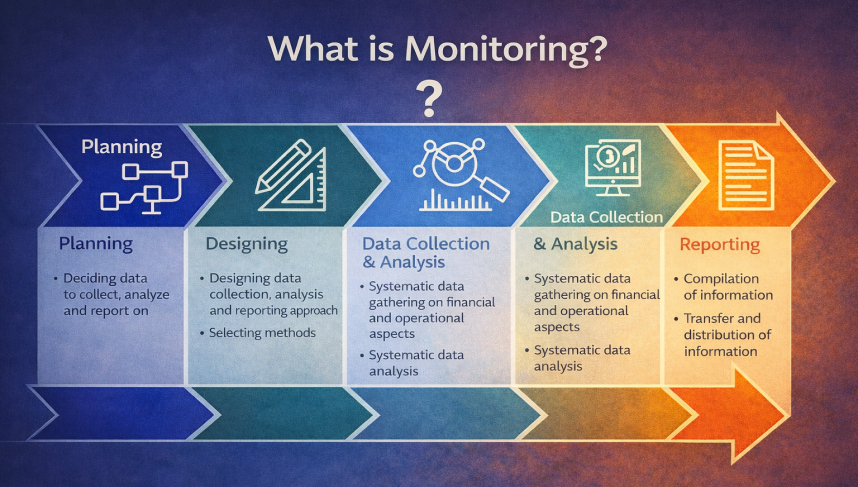
Monitoring means collecting data about your system and watching it closely. You set limits for things like CPU usage, memory, or error rates.
If something crosses those limits, you get an alert. This helps DevOps teams spot problems early and take action fast.
Typical things that monitoring tracks include:
- CPU, memory, and disk usage
- Error rates
- Response times
- Uptime/downtime
- Network throughput
Key Difference Between Observability and Monitoring
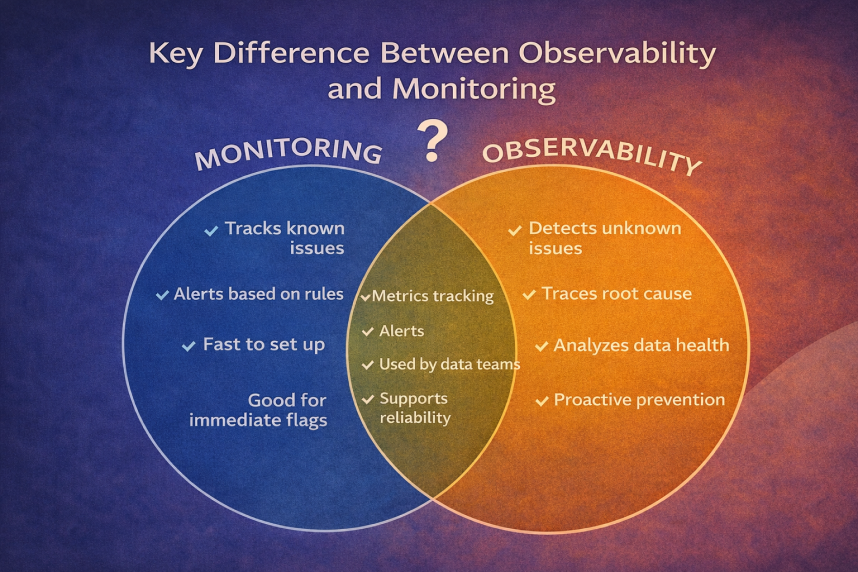
Let’s make it simple….
Both observability and monitoring help you keep the system healthy. But they are not the same thing. They solve different parts of the same problem.
Let’s break them down clearly and understand the difference:
1. Purpose and focus
Monitoring is mainly for watching systems and triggering alerts when something crosses a set limit.
It focuses on predefined metrics such as CPU usage, memory consumption, response time, or error rates. Its job is simple: detect when something is normal.
Observability, on the other hand, focuses on understanding system behavior in depth. It does not just alert you that something failed.
It helps you investigate what is happening inside the system and why it failed in the first place.
2. Types of problems they handle
Monitoring works best when you already know the problems your system can face. You set limits, and if anything crosses those limits, you get an alert.
But today’s modern clouds are not that simple. They have many services talking to each other. Sometimes issues happen in a way you would not expect, and you might not even have created an alert for that problem.
This is where Observability helps. Even if there is no predefined alert, observability tools let you dig deeper. It helps you in finding real issues and rare bugs that monitoring might miss.
3. Data collection vs Data understanding
Monitoring collects data and uses this data mostly to trigger alerts and show dashboards. Data includes metrics, logs, and events.
Whereas Observability also relies on metrics, logs, and traces, but it connects them. It allows you to correlate data from multiple services and & track how a single request flows across the system.
4. View of the system
Monitoring often checks individual components like servers, databases, or APIs. It tells you whether a specific part is healthy or not.
Observability gives you a full view of your system. This helps you see how one service affects another.
This is especially important in microservices and distributed systems where many services depend on each other. If one fails, it can affect everything else.
5. Detection vs root cause analysis
Monitoring helps you spot problems fast. When something breaks, it sends an alert right away.
But after the alert, engineers still have to investigate the issue manually. The alert tells you something is wrong, not why.
Observability helps you fix the problem faster. It shows the root cause. Additionally, it also shows how that problem affected the rest of the system.
Why do we need both Observability and Monitoring?
Many teams get confused while selecting between monitoring and observability, as they sound similar. But they are not similar, and you need both.
Let’s see why:
- You need both because modern systems are complex, fast, and unpredictable. One tool is enough to keep everything stable.
- You need monitoring for instant alert. It alerts you if a server crashes, error increases, or performance drops. Without it, you may find out about problems from your users.
But alerts alone don’t solve everything…
When you see that something failed, you still need to understand why it failed. In cloud and microservice setups, the root cause is rarely simple. That’s where observability helps.
- You need observability to find the root cause. It lets you dig into logs, traces, and metrics to find the exact source of the issue.
- Monitoring helps you detect problems quickly. Whereas Observability helps you fix them correctly.
When you use both together, they reduce downtime, solve issues faster, and prevent the same issues from happening again.
Final Thoughts
Now we can conclude that monitoring tells you about something that broke. Whereas, Observability tells you why it broke and how to fix it before everyone panics.
Modern DevOps teams need both. If your systems are simple, monitoring might be enough. But once things grow and get messy, observability saves your time.
Therefore, set it up, keep checking, learn from the data, and improve as you go.