When a software project fails, it is because developers cannot code…. Most failures happen because the process is wrong.
That is where software development methodologies come in.
Software development methodologies are structured ways to plan, build, test, and deliver software. They guide teams on what to do, when to do it, and how to work together. Choosing the right methodology can save time, money, and frustration.
Choosing the wrong one can lead to delays, bugs, and unhappy users.
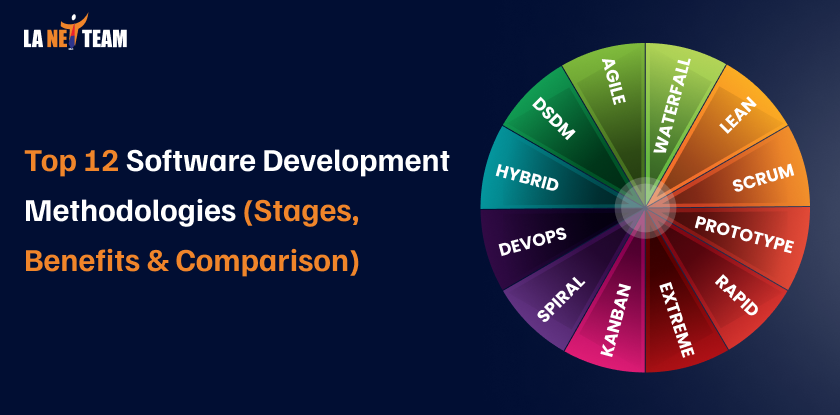
This guide explains the top 12 software development methodologies, their stages, benefits, and when to use each one.
What are Software Development Methodologies?
Software Development methodologies are step-by-step frameworks that teams follow to plan, build, test, and deliver software.
Instead of coding randomly, teams use a methodology to decide:
- What to build first
- How will work be divided
- When should testing happen
- How changes will be handled
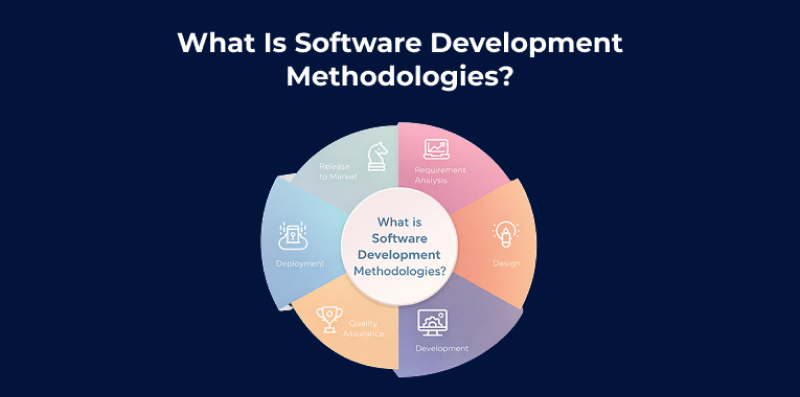
Every software product goes through stages like planning, design, development, testing, and release. Software development methodologies help teams move through these stages in an organized way.
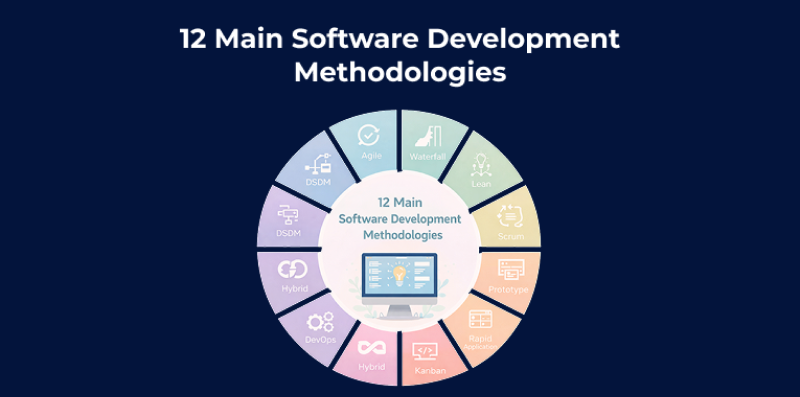
Quick Comparison Table of Software Development Methodologies
Here’s a quick table comparison to help you understand the main differences between popular software Development Methodologies.
It’s a fast way to see which approach might suit your project best.
| Methodology | Flexibility | Best For | How It Works |
|---|---|---|---|
| Agile | High | Projects with changing needs | Work is done in small parts with regular feedback |
| Waterfall | Low | Fixed and clearly defined projects | Each phase is completed before the next begins |
| Lean | Medium | Cost-efficiency-focused teams | Removes waste and focuses only on value |
| Scrum | High | Team-based product development | Work is done in short, time-boxed sprints |
| Prototype | High | New ideas and user testing | Early versions are built to gather feedback |
| Rapid Application | High | Fast-delivery projects | Quick development with continuous user input |
| Extreme | High | Quality-focused development | Heavy testing and frequent updates |
| Kanban | Medium | Continuous work environments | Visual task flow with work-in-progress limits |
| Spiral | Medium | High-risk projects | Development happens in loops with risk analysis |
| DevOps | High | Frequent releases | Development and operations work together |
| Hybrid | Medium–High | Mixed project requirements | Combines two or more methodologies |
| DSDM | Medium | Business-driven applications | Focuses on strict timelines and business priorities |
12 Main Software Development Methodologies
1. Agile Methodology
Agile methodology is a way of building software step by step, instead of doing everything at once.
In this method, the software projects are managed by breaking them into small, manageable cycles called sprints. Instead of waiting for months to see the product, agile testing sprints and improve them regularly based on feedback.
Companies like Google and Amazon use it for its adaptability in fast-paced environments. This method is perfect for projects where requirements change often.
| Pros | Cons |
|---|---|
| Flexible to changes | Hard to predict timelines |
| Faster delivery | Needs strong team communication |
| Regular customer feedback | Not ideal for fixed-budget projects |
| Better product quality |
Stages of agile methodology
- Planning
- Design
- Development
- Testing
- Review
- Release
2. Waterfall Methodology
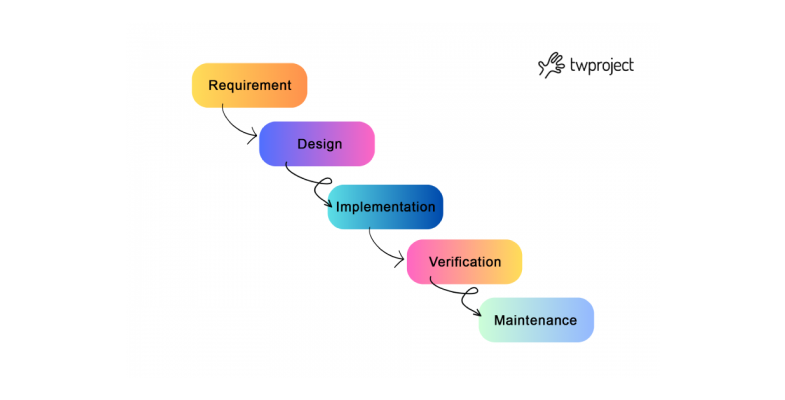
The Waterfall methodology is one of the oldest ways to build software, and it’s very simple to understand.
In this method, workflows flow from one step to the next, and you can’t move forward until the current step is finished. It’s best for projects where you know exactly what you want from the start.
| Pros | Cons |
|---|---|
| Very structured and easy to follow | Hard to make changes once a step is done |
| Clear documentation for every step | Testing happens late, so bugs may appear only at the end |
| Works well if requirements are fixed and unlikely to change | Not ideal for complex or long projects where requirements can change |
Stages of Waterfall methodology
- Requirements
- Design
- Development
- Testing
- Deployment
- Maintenance
3. Lean Methodology
Lean methodology is a simple way of building software. By cutting out anything wasteful and focusing only on what customers truly value.
The main goal is simple: deliver value faster with less waste. This method is best for teams that want efficiency and cost control.
| Pros | Cons |
|---|---|
| Saves time and cost | Requires strict discipline |
| Focuses only on what matters | Less documentation than traditional methods |
| Delivers value to users faster | Can be hard for new teams to follow |
Stages of lean methodology
- Identify value
- Map the workflow
- Build and test
- Improve continuously
4. Scrum Methodology
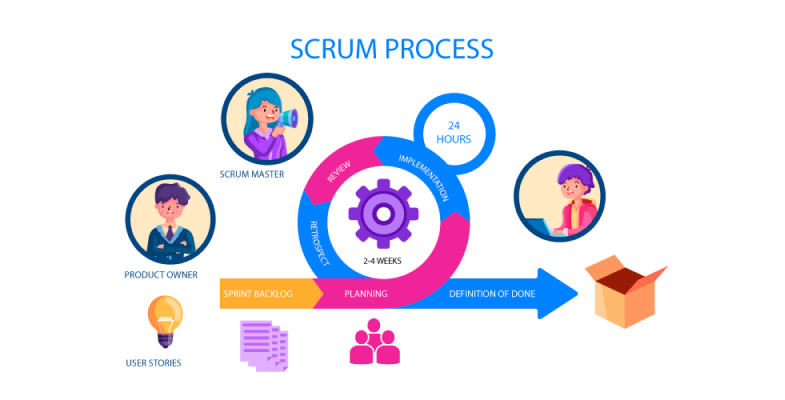
Scrum methodology is a simple way for teams to build software by breaking big work into small parts.
The team works in short time periods called sprints, usually lasting 2 to 4 weeks. After each sprint, the team checks what’s done, gets feedback, and improves the plan.
It’s part of the Agile family, which means it’s flexible and focuses on little, frequent progress instead of trying to finish everything at once.
| Pros | Cons |
|---|---|
| Clear goals for each sprint | Daily meetings may feel time-consuming |
| Fast delivery of usable features | Requires experienced team members |
| Teams can adjust quickly to changes | Can struggle if team members don’t communicate well |
Stages of Scrum methodology
- Sprint Planning
- Daily stand-ups
- Development
- Sprint review
- Sprint Retrospective
5. Prototype Methodology
Prototype methodology focuses on showing the idea before building the final product.
Instead of starting with full development, a simple working version is created first so users can see how the software will look and work.
This early model helps teams collect feedback, find issues, and improve the design before investing time and effort into the complete system.
This method is best for projects where requirements are unclear or user feedback is very important.
| Pros | Cons |
|---|---|
| Users can see and test the product early | Can increase cost if multiple prototypes are built |
| Reduces the risk of building the wrong thing | Users might expect the prototype to be the final product |
| Helps clarify requirements that might be unclear | Poor documentation if the focus is only on quick models |
Stages of Prototype methodology
- Gather requirements
- Build a prototype
- Get feedback
- Refine
- Develop the final product
6. Rapid Application Methodology
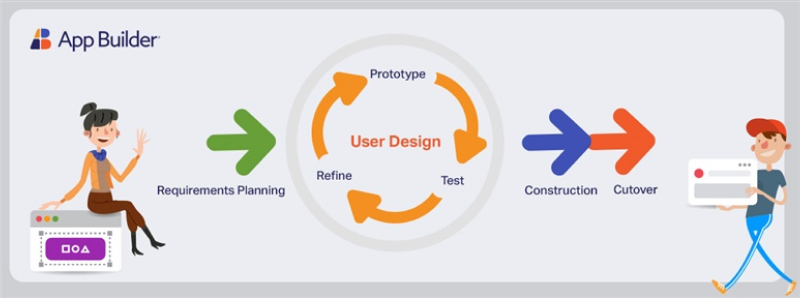
Rapid Application Development (RAD) methodology is a way of building software quickly by focusing on fast prototyping and user feedback instead of long planning.
The goal is to deliver working parts of the software fast, get feedback, and improve continuously.
| Pros | Cons |
|---|---|
| Easy to make changes during development | Not suitable for very large or complex projects |
| Very fast development | Requires highly skilled developers |
| Users are involved early, so the product matches their needs | Can lead to too many changes if feedback is constant |
Stages of Rapid methodology
- Requirement planning
- User design
- Construction
- Cutover (implementation)
7. Extreme Programming Methodology
Extreme Programming (XP) methodology is a software development approach that focuses on high-quality code, fast delivery, and constant feedback.
It is called “extreme” because it pushes good development practices to the next level.
| Pros | Cons |
|---|---|
| You will see fewer bugs due to constant testing | Hard to manage for large teams |
| Gives a fast response to changing requirements | Requires experienced developers |
| Provides strong teamwork and high-quality code | Needs continuous customer involvement |
Stages of Extreme methodology
- Planning
- Design
- Coding
- Testing
- Release
8. Kanban Methodology
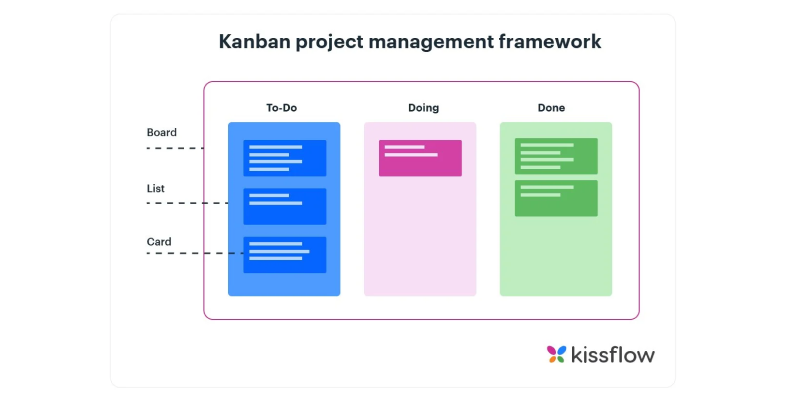
Kanban Methodology is a simple way to manage by visualizing tasks and limiting how much work is done at one time.
This method helps the team see what needs to be done, what is in progress, and what is finished.
| Pros | Cons |
|---|---|
| Very easy to understand and use | No fixed deadlines |
| Helps teams spot delays quickly | Depends heavily on team discipline |
| Improves focus by limiting work in progress | Can lack structure for large projects |
Stages of Kanban methodology
- List all tasks that need to be done
- Show tasks on a board
- Limit work in progress
- Move tasks forward
9. Spiral Methodology
Spiral methodology is a software development approach that focuses on reducing risk while building the product step by step.
It combines planning, designing, building, and testing in repeated cycles called spirals.
| Pros | Cons |
|---|---|
| Flexible to changes | More expensive than simple methods |
| Continuous testing and feedback | Needs experienced teams |
| Reduces the risk early | Not suitable for small projects |
Stages of Spiral methodology
- Planning
- Risk Analysis
- Development & testing
- Get feedback
10. DevOps Methodology
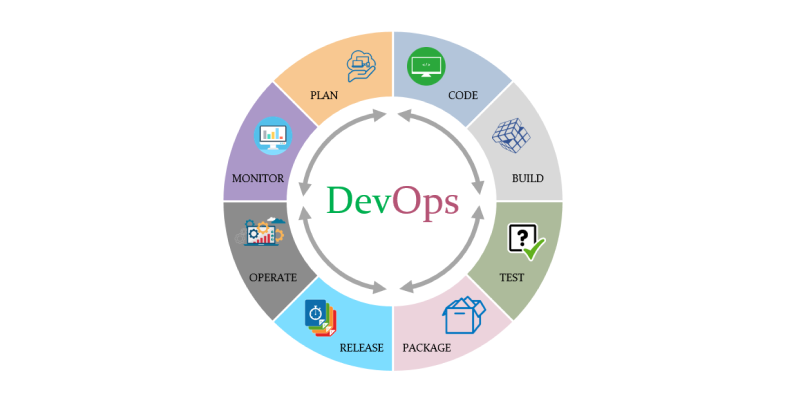
DevOps methodology is a way of building and delivering software by bringing developers and operations teams together.
The goal is simple: release software faster, with fewer problems.
| Pros | Cons |
|---|---|
| Helps in quick bug fixes | Requires cultural change |
| Better collaboration between teams | Needs automation tools |
| Fewer deployment failures | Learning curve for teams |
| Faster software releases |
Stages of DevOps methodology
- Plan what to build
- Write and test the code
- Integrate new code with existing code
- Release updates quickly and safely
- Monitor performance and fix issues
11. Hybrid Methodology
Hybrid methodology is a software development approach that mixes two or more methods to fit a project’s needs.
It usually combines Waterfall’s planning with Agile’s flexibility. This method works best for projects that need planning but also room to change.
Stages of Hybrid methodology
- Plan Upfront
- Build in phases
- Review often
- Release the product step by step
12. DSDM (Dynamic Systems Development Method)
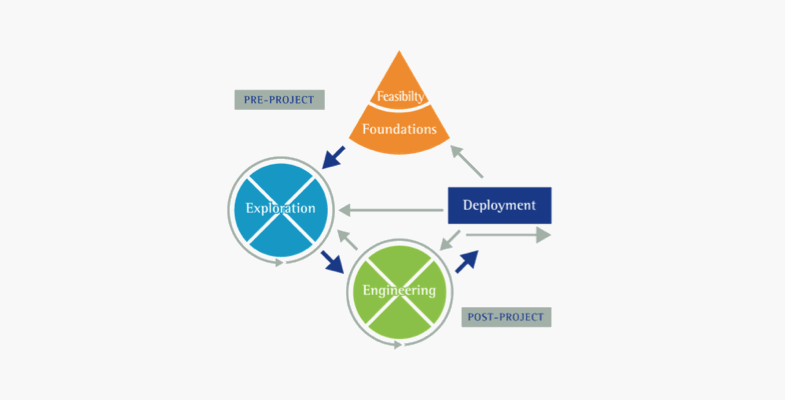
DSDM (Dynamic Systems Development Method) is an Agile methodology that focuses on delivering useful software on time and within budget.
It puts business needs first and makes sure users are involved throughout the project.
| Pros | Cons |
|---|---|
| Strong focus on business value | Requires active user participation |
| Continuous user involvement | Not ideal for very small projects |
Stages of DSDM methodology
- Check if the project is worth doing.
- Understand the basic requirements and risks.
- Set scope, budget, and priorities.
- Build and improve the product in small parts.
- Release the working solutions.
- Review and support the product.
How to choose the right Software Development Methodology?
Choosing the right software development methodology is about matching the method to how your projects actually work.
Here’s a practical way to decide.
Step 1: Start with clarity
First, understand your requirements. Ask yoursel
- Do you already know exactly what needs to be built?
- Or will things change after users see the product?
or clear and fixed requirements: Go with the waterfall methodology.
For unclear or likely to change: Agile or Scrum is a perfect fit.
Step 2: Look at your project size and risk
Not all projects need the same level of control.
- Small, low-risk projects → Agile, Kanban
- Medium projects → Scrum, Lean
- Large or high-risk projects → Spiral, Hybrid
If mistakes are costly, choose a method that focuses on early planning and risk handling.
Step 3: Consider your team’s strengths
Your team matters as much as the project.
- Small, experienced teams → Agile, XP, Lean
- Large teams → Scrum, DevOps
- Mixed skill levels → Waterfall or Hybrid
Some methods need strong technical skills and discipline. Choose one that your team can actually follow.
Step 4: Decide how fast you need results
Speed is important, but so is stability.
- Fast delivery needed → Agile, Scrum, RAD
- Long-term stability → Waterfall, Spiral
- Frequent updates → DevOps, Kanban
Quick delivery is useful only if quality stays high.
Step 5: Check how involved users can be
User involvement changes everything.
- Regular user feedback available → Agile, Scrum, Prototype
- Limited user availability → Waterfall, Spiral
If users can’t review work often, avoid methods that depend on constant feedback.
Step 6: Budget timeline matters more than features
Be realistic with constraints.
- Fixed budget and deadline → Waterfall, DSDM
- Flexible scope → Agile, Lean
- Limited budget → Lean, Kanban
A methodology should help you control cost and time, not increase them.
Final thoughts
There is no best methodology…. There is only one that fits your goals, team, budget, and risk level.
Choose the method that helps your team deliver value consistently, not the one with the longest feature list.
If you want, share your project details, and we’ll help you pick the right one.