This guide will show you how to scale your business using white-label SaaS tools. (without building your product from scratch)
In fact, over 73% of agencies now use white-label tools to expand.
We didn’t just list down tools from the internet. Our team has tested dozens of white-label Saas platforms.
Some looked great on sales pages but failed in real use. Others quietly helped agencies and businesses grow faster, sell more, and look bigger than they actually are.
So, let’s get started.
What does “White Label SaaS” actually mean?
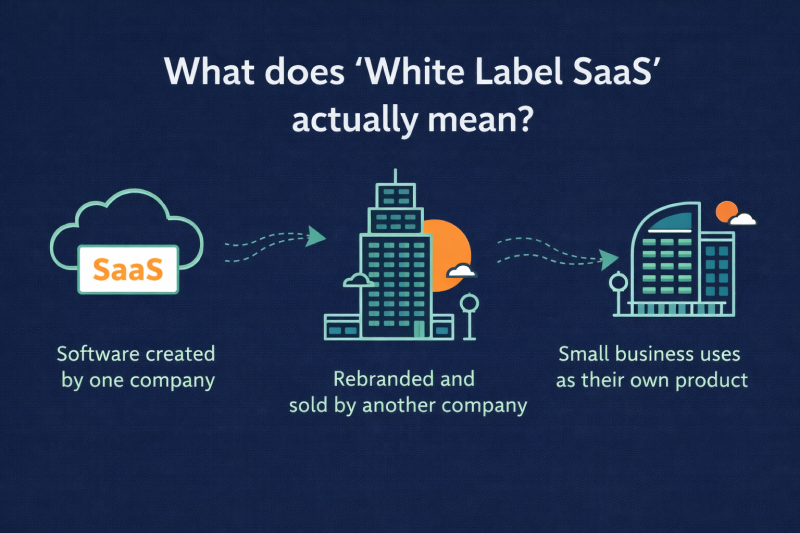
White label SaaS means using a ready-made SaaS tool built by another company and selling it under your own brand name. SaaS stands for software as a service, which means that software runs online and users access it through a browser by paying a monthly or yearly fee.
In a white label setup, you do not build the software yourself. The original company handles the coding, servers, updates, security, and maintenance.
You simply rebrand the platform with your logo, your domain, and your pricing. To your clients, it looks like your own product.
Why White Label Saas Tools Matter?
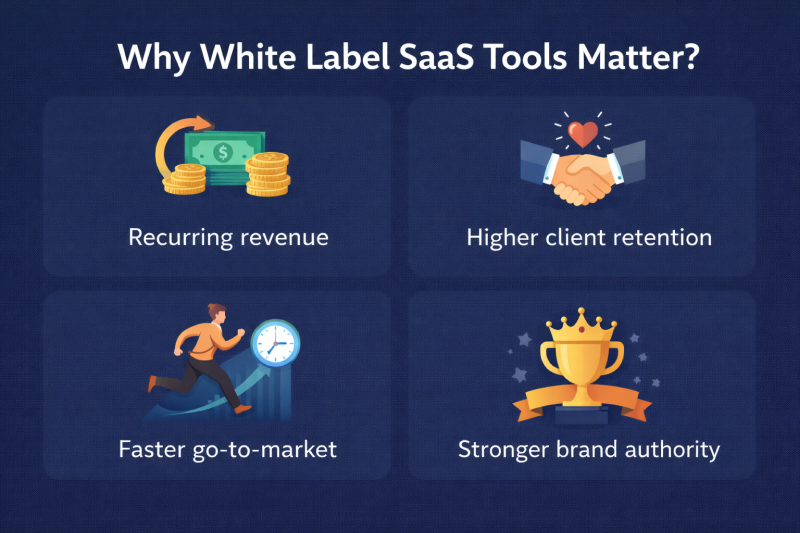
White label crm SaaS management tools matter because they change how your business earns and grows. Let’s understand those benefits in detail:
1. Recurring revenue
Most businesses earn money on a project-based basis. Once you finish that project, you get paid for it and then look for the next client.
With a white label SaaS tool, you charge clients every month to use the software. This gives you a steady income. This makes your business more stable and easier to plan.
2. Higher client retention
When a client only connects with you for a single service, it means they can leave you anytime.
But if they use your branded software daily, they will become dependent on it.
And then it will become difficult for them to leave you. This is how your client will stay longer, and your revenue will grow without any extra marketing efforts.
3. Faster go-to-market
Building software from scratch takes time, money, and a technical team. But with the help of white label SaaS, you get already built software.
You just need to add your logo, your domain, and your pricing. This means you can launch in weeks instead of years.
4. Stronger brand authority
When you provide your own SaaS tool, clients see you differently. You look like a trusted tech company with your own product.
This gives you the authority to charge more because clients feel they are getting both service and technology in one place.
10 Best White Label SaaS Tools (Free tools)
Here are the 10 Best Saas management platform for agencies that want control, automation, and recurring revenue in one place. Let’s learn about them in detail:
1. Centripe
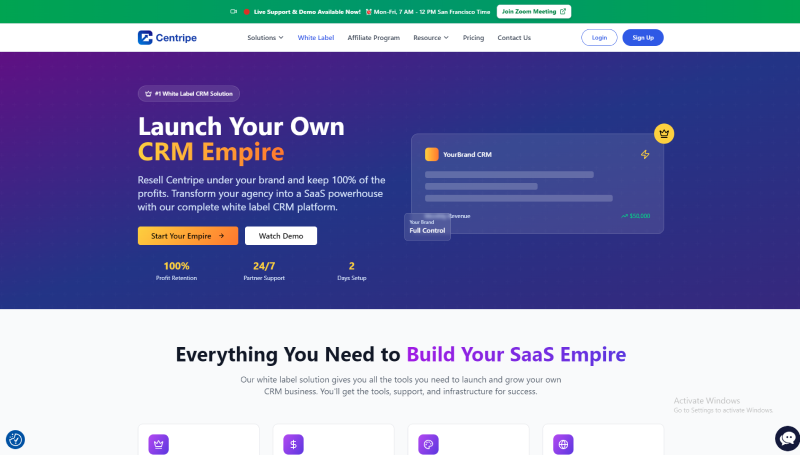
Centripe is a modern, all-in-one CRM and automation platform built for agencies looking to sell their own branded system. Instead of stitching together five different tools, Centripe combines pipeline management, marketing automation, funnels, and reporting into a single dashboard.
To use this white label product, agencies typically subscribe to a partner or higher-tier plan that gives them full branding control. You can run it on your own domain, add your logo, set your pricing, and create sub-accounts for clients.
It works best if your goal is to package CRM+ automation as a monthly subscription and offer onboarding or strategy as an upsell.
| Advantage | Limitations |
|---|---|
| Perfect fit for small and mid-sized agencies | Fewer ready-made templates, so you may need to build more things yourself |
| Easy to understand and not too complicated for beginners | |
| CRM, funnels, and automation in one place, so you do not need many tools |
2. GoHigh Level
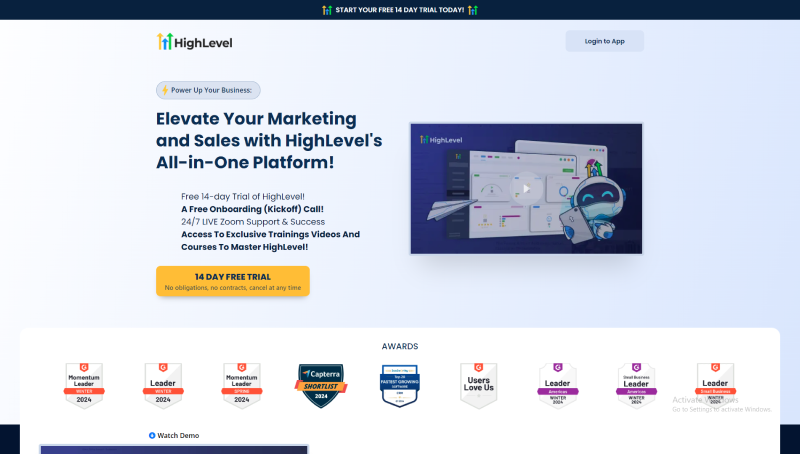
GoHighlevel is one of the most well-known white label SaaS platforms in the agency space. It was introduced especially for marketing agencies that want to resell a full marketing stack under their own brand.
It combines CRM, funnel builder, email marketing, SMS marketing, call tracking, appointment booking, and automation in one system.
On the higher plan, you get a full white label capability, including your own mobile app branding.
The reason many agencies choose GoHighLevel is very simple: It replaces tools like ClickFunnels, Calendly, and basic CRMs.
| Advantage | Limitations |
|---|---|
| Strong white label option with your own branding and even a mobile app | Can feel confusing in the beginning |
| Their snapshot feature helps you copy setups fast for new clients | Some users do face bugs in the tool sometimes |
| All-in-one system for CRM, automation, SMS, and email | Too many features that can overwhelm small teams |
3. Vendasta
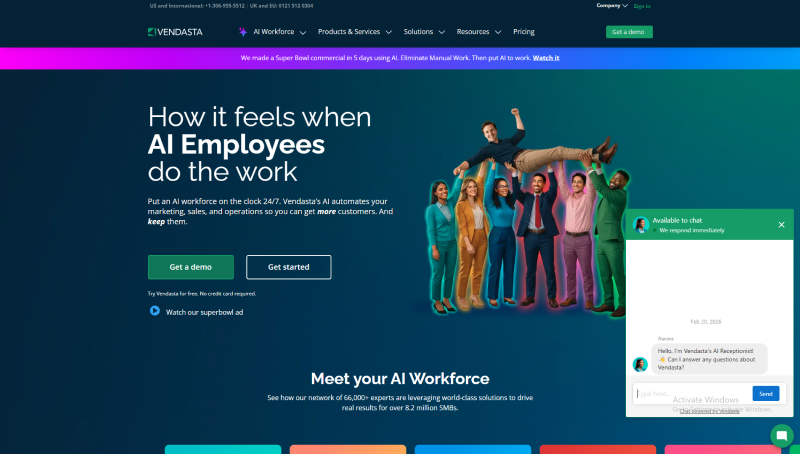
Vendasta is a white label marketplace designed for agencies that want to resell digital solutions at scale.
Instead of building tools from scratch, Vendasta gives you access to dozens of pre-built solutions. Solutions such as reputation management, listing management, SEO Services, email marketing, and CRM systems.
The biggest advantage is the ecosystem. It helps in bundling up multiple services into one client subscription. Vendasta works well for agencies that want to act as a digital seller hub.
| Advantage | Limitations |
|---|---|
| It is a huge marketplace for digital services that you can resell | It is too pricey |
| Good choice for agencies selling SEO, listing, ads, and more | Less control compared to building your own custom setup |
| Central dashboard to manage clients |
4. ActiveCampaign
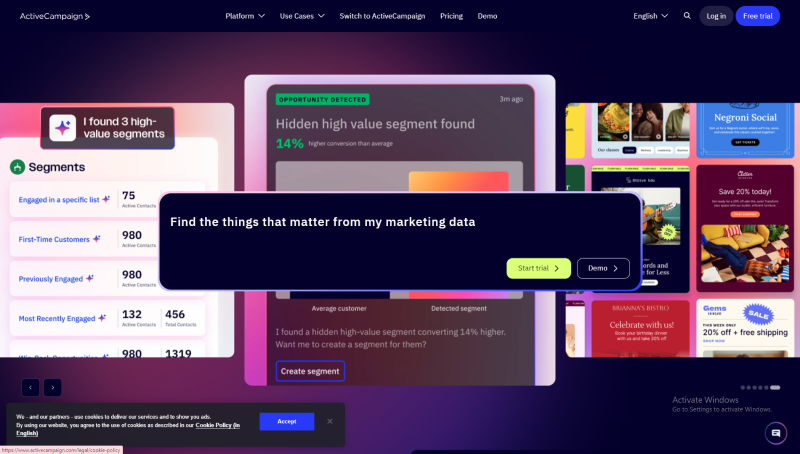
ActiveCampaign is widely known for marketing automation and email marketing. It brings automation workflow, CRM, behavioural tracking, and campaign management in one platform.
To participate in its white label, businesses usually operate through an enterprise or value-added reseller partnership. Many agencies resell ActiveCampaign by packaging it with consulting, onboarding, analytics, and strategy services.
This tool is ideal for you if your main value proposition is automation, lifecycle marketing, and advanced email segmentation.
| Advantage | Limitations |
|---|---|
| Very strong email and automation system | Not built mainly for white label agencies |
| Powerful segmentation and workflows | Can feel difficult for beginners to use |
| It has good deliverability, so emails land in the inbox | For full branding features, you need to choose a higher paid plan |
5. Bitrix24
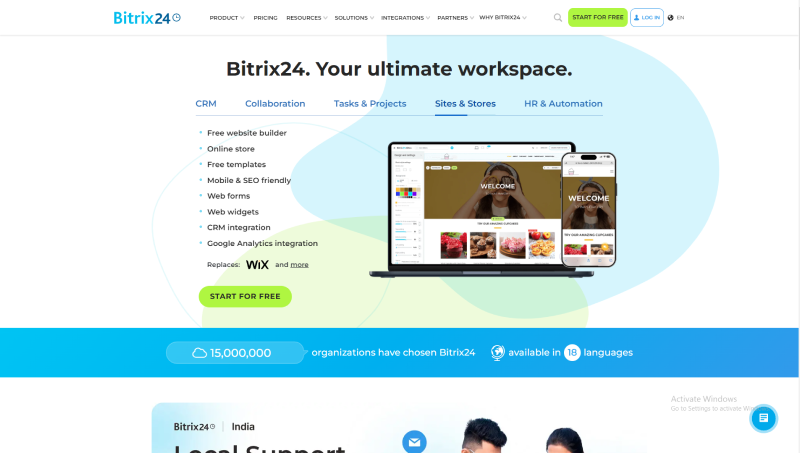
Bitri24 is a broad business management platform that combines CRM, project management, communication tools, documemtation collaboration in one place.
Unlike other tools, Bitrix focuses on marketing and provides internal teams with tools like chat, task boards, calenders and file storage.
Additionally, they have white label options available on higher plans, where you can customize branding and a domain. This tool works best for companies that want to offer CRM combined with workflow and internal management tools.
| Advantage | Limitations |
|---|---|
| You can use their free plan and then decide | The interface looks busy and overwhelming |
| Good choice for larger teams | Setup can take time |
| It has CRM plus Teams tools like chat, tasks, and documents |
6. Brevo
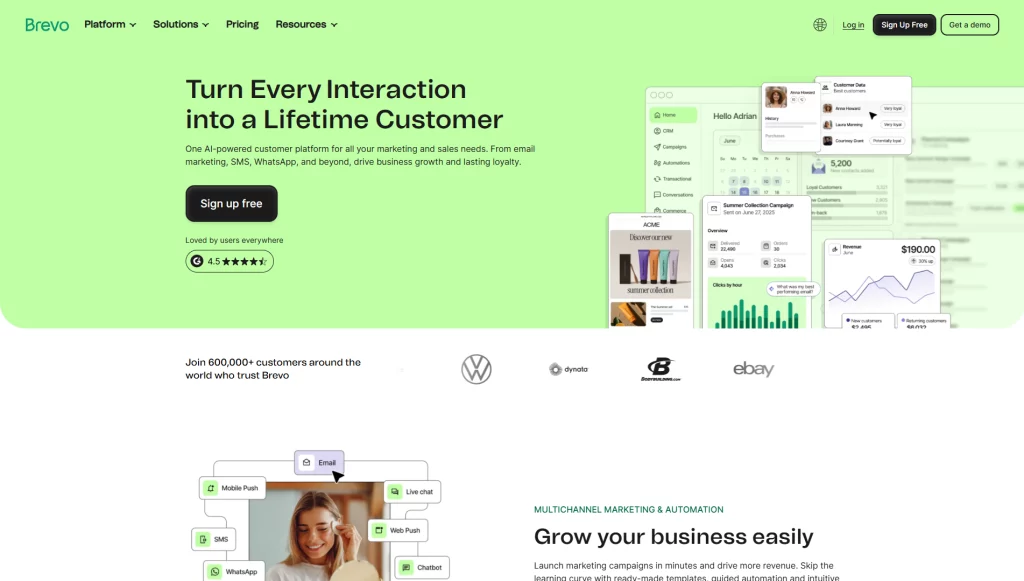
Brevo is an email and SMS marketing platform formerly known as Sendinblue. Focuses on automation, transactional messaging, and campaign tools, with white label support for agencies.
Agencies can resell Brevo services by integrating and branding communication solutions for clients. It is often chosen by agencies that manage newsletters, e-commerce campaigns, and automated communication flows.
| Advantage | Limitations |
|---|---|
| Perfect for those looking for an affordable pricing tool | It does not have very advanced features compared to bigger automation tools |
| It is very simple to use, even for beginners | White label features are very limited |
7. SuiteDash
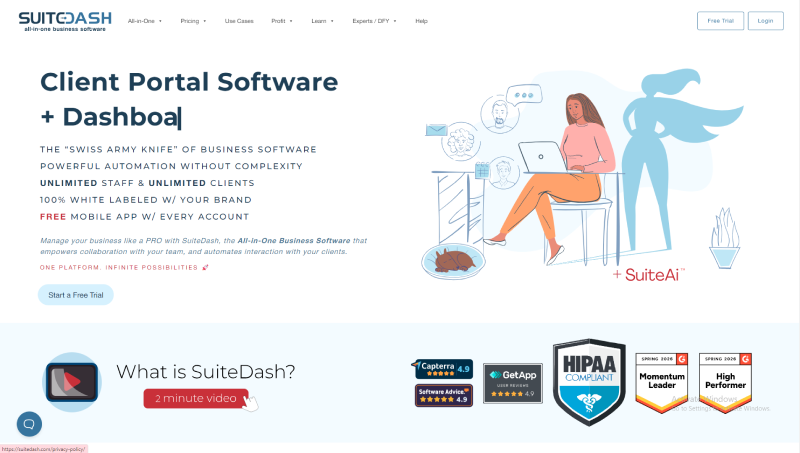
SuiteDash is positioned as a business operating system for agencies and consultants. It combines CRM, client portals, invoicing, file sharing, project management, and automation.
The platform offers strong white label features, including custom domains, full branding control, and customizable client dashboards.
Its biggest advantage is consolidation. Instead of using separate tools for proposals, contracts, billing, and CRM, everything lives inside one branded system.
| Advantage | Limitations |
|---|---|
| You get full branding control | Not very strong in marketing automation |
| You get CRM plus invoices, proposals, and contracts all in one platform | Learning curve is steep because it has many modules |
| It includes strong client portal features |
8. DashClicks
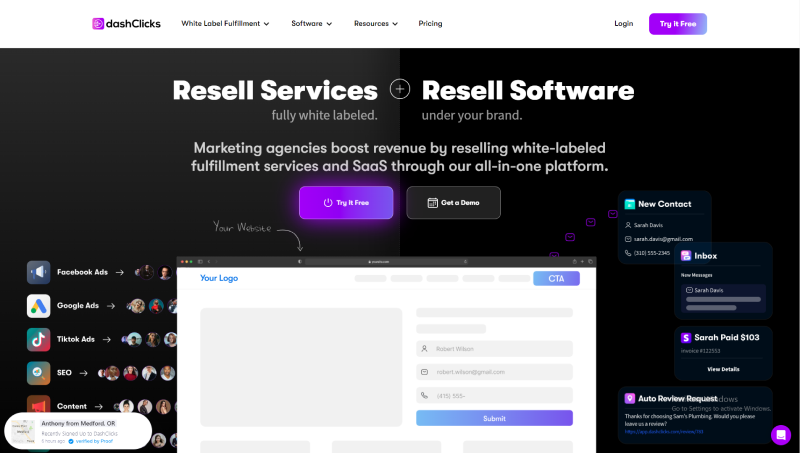
Dashclicks is designed especially for digital marketing agencies. It offers CRM, reporting dashboards, automation, and even fulfillment services.
The white label structure allows agencies to present the platform as their own technology stack.
What makes DashClicks different is the built-in fulfillment option. If you sell SEO or ads but do not want to execute them yourself, you can use their backend team.
| Advantage | Limitations |
|---|---|
| It has easy white label reporting | Not very deep in advanced analytics |
| You can use their fulfillment team | Some services can feel expensive |
| Has a very simple pricing structure |
9. Moosend
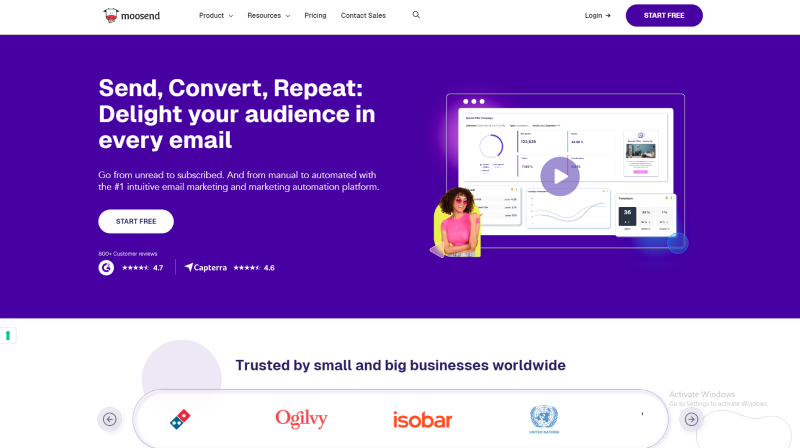
When we look for white label email marketing tool, Moosend comes first to mind. It was built to make email marketing simple without removing the important features. You can also say Moosend is a powerful alternative to Mailchimp, but with better branding flexibility for agencies.
It helps you create newsletters using drag and drop templates, set up automated email flows, and track campaign performance from one dashboard.
Moonsend works well if you want an affordable, easy-to-manage email automation system that you can package and resell as part of your service offering.
| Advantage | Limitations |
|---|---|
| The interface is clean and simple, so beginners don’t get lost | It’s mainly for email and automation, so you still need a separate CRM for customer tracking |
| You can easily build email automation flows without heavy tech skills | Compared to big platforms like ActiveCampaign, it lacks deep segmentation and behavioral triggers |
| With its drag-and-drop builder, you can build a campaign faster without coding | Full white label branding is not as straightforward as some tools on your list |
10. SocialPilot
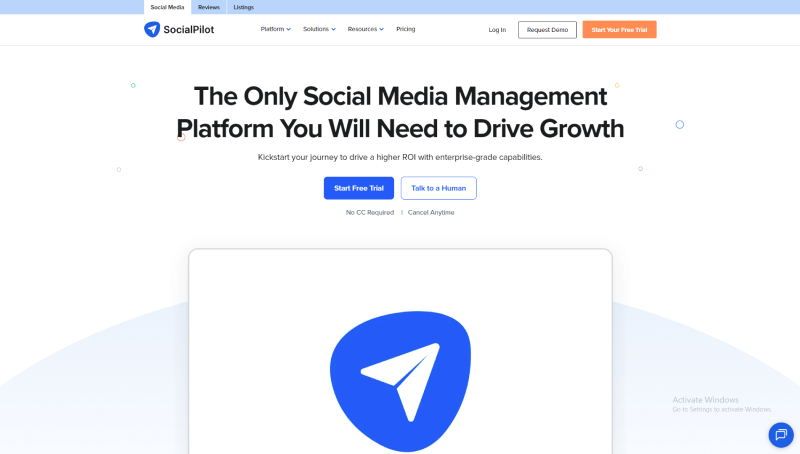
Social Pilot, by name, says that it is a social management tool that offers white label dashboards and reporting.
It lets agencies manage multiple social accounts, schedule posts in bulk, and generate branded performance reports. While it is not a full CRM, many agencies bundle it with CRM tools.
The USP of SocialPilot lies in social scheduling efficiency and client reporting.
| Advantage | Limitations |
|---|---|
| The dashboard is clean and straightforward so you can understand it easily | It doesn’t support very deep automation like email flows and audience triggers |
| You can plan posts for many platforms in one place | It’s very difficult to handle comments or messages inside the tool |
| Compared to other tools, the pricing is friendly for multiple clients | Some users complain that advanced analytics are missing compared to tools like Sprout Social |
| You can easily manage roles and let team members help with social tasks |
How To Choose the Right White Label SaaS Tool (Decision Framework)
Many agencies rush into tools like GoHighlevel or Vendesta because they see others using them. But without a decision framework, you may end up paying for features you never use.
Step 1: Be clear about what you are selling
Decide your core offer first, whether it is CRM, automation, email marketing, portals, or social media management.
Then match it with the right white label SaaS products like Centripe, GoHighlevel, Moosend, or SocialPilot instead of choosing randomly.
Step 2: Understand your client’s technical level
Choose a platform that your clients can actually use without any doubt. Simple tools work better for small businesses, while advanced systems like Bitrix24 or ActiveCampaign suit structured teams.
Step 3: Check branding control and reseller model
Compare branding flexibility and understand the difference between white label vs private label before committing.
Strong white label development options help you build authority instead of just adding your logo.
Step 4: Evaluate pricing structure and margins
Calculate your cost per client and compare it with your selling price to protect margins. Some tools, like Vendasta or DashClicks, may have extra service costs that affect profitability.
Step 5: Feature depth vs simplicity
Make sure to decide on the basis of what you truly need and not on the basis of the one that has a long list of features. The tool that you choose based on your needs gives you better results than an overloaded system you barely use.
Step 6: Support and community
Strong support and active communities make scaling easier and reduce technical stress. Platforms with training resources save you time during onboarding and growth.
Final Thoughts
When you look at white label SaaS tools, one thing becomes clear. The tool you choose decides how much you save on your time and money.
Therefore, pick the tool that actually fits your service, your client, and your team. Now that you know the top 10 best White label Saas products, decide which one fit in you checklist. Test them, break them a little, then trust the ones that hold up.