Every Software project starts with a PLAN.
And your plan decides whether the project succeeds… or fails.
Some teams like to plan everything upfront and move step by step. Others prefer to build, test, learn, and adjust as you go.
That’s where agile vs waterfall comes in.
Both approaches are widely used… Both can work.. But choosing the wrong one can lead to delays, budget issues, and frustrated teams.
That’s why understanding the 10 key differences between Agile methodology vs Waterfall matters.
What is Agile vs Waterfall Methodology?
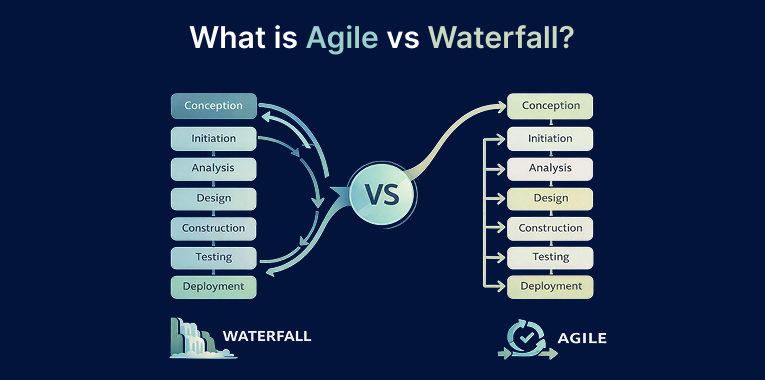
Agile and Waterfall are two popular ways to manage software projects, but they work very differently. Understanding this basic difference helps you choose the right approach before starting a project.
What is Agile methodology?
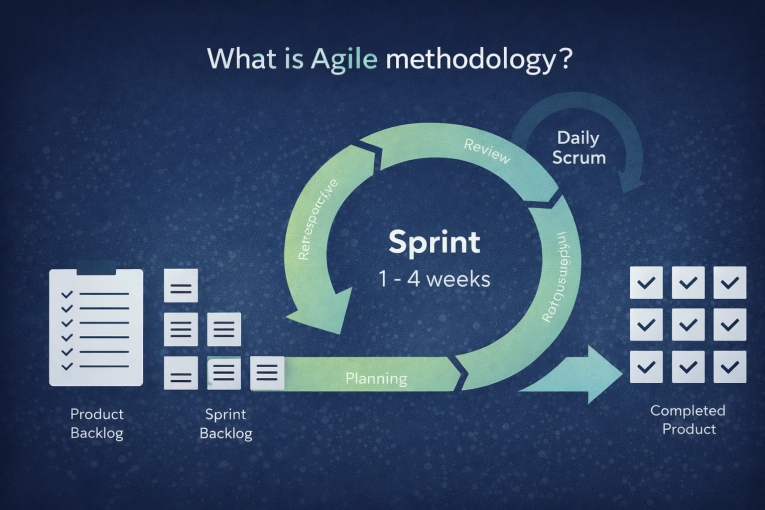
Agile methodology builds software in small parts, called iterations or sprints. Each sprint usually lasts 2-4 weeks and delivers a working feature.
Instead of planning everything upfront, Agile allows teams to:
- Take feedback early
- Make changes anytime
- Improve the product gradually
Agile works best when requirements are not fully clear at the start or may change over time.
| Pros | Cons |
|---|---|
| You can change features even late in the project | Cost and timeline can change as the scope changes |
| Working parts are released quickly, not at the end | Needs active user involvement |
| Users review the product often, so it meets real needs | Hard to use when everything must be decided upfront |
| Developers, testers, and designers work closely together | Inexperienced teams may struggle with agile discipline |
What is the waterfall methodology?
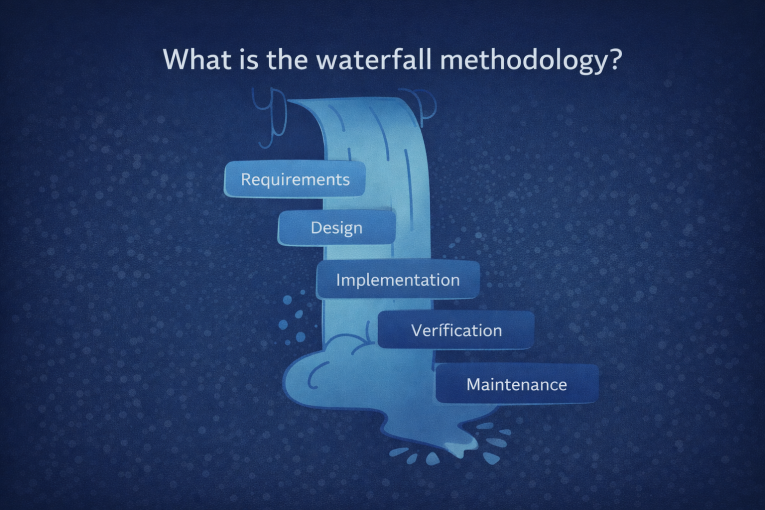
Waterfall methodology follows a linear and structured process. Each phase must be completed before moving to the next. It works better when everything is clearly defined, and changes are unlikely.
Typical waterfall stages:
- Requirements
- Design
- Development
- Testing
- Deployment
Once a stage is finished, going back is difficult.
| Pros | Cons |
|---|---|
| Everything is defined before development starts | Making changes later is difficult and costly |
| Progress is simple to track through stages | Users see the product only at the end |
| Useful for compliance and long-term reference | Problems discovered late can be expensive |
| Costs and deadlines are fixed early | No working product until the final phase |
Agile vs Waterfall Comparison Table
This table gives a quick and clear comparison between Agile and Waterfall so you can understand the difference at a glance.
| Aspect | Agile Methodology | Waterfall Methodology |
|---|---|---|
| Best Use Case | Ideal for startups, software products, or projects where requirements can change | Ideal for government or contract projects where scope and rules are fixed |
| Client Involvement | Clients are involved throughout the project for feedback and improvements | Clients usually see the product only at the start and end |
| Handling Changes | Requirements can change anytime, even late in development | Changes are difficult and expensive once a phase is completed |
| Project Structure | Work is done in short cycles (sprints) with gradual improvement | Follows a strict sequence where each phase must finish before the next begins |
| Team Collaboration | Teams work closely together throughout the project | Teams work separately, passing work between phases |
| Project Size Fit | Works well for medium to large projects that evolve over time | Best for small projects with clear and fixed requirements |
| Testing Approach | Testing happens continuously in every sprint | Testing happens only at the end of development |
| Team Size & Skills | Small, skilled, cross-functional teams | Larger teams with specialized roles |
| Cost Control | Costs are flexible; scope can be adjusted as needed | Costs are fixed early; later changes can be expensive |
| Time to Delivery | Faster delivery with working software released in parts | Delivery takes longer; full product is released at the end |
| Flexibility Level | Very flexible and adapts easily to changes | Rigid and hard to change once started |
| Risk Management | Risks are identified early through regular feedback | Risks are often discovered late during testing |
| Documentation | Minimal documentation, focus on working software | Heavy documentation required upfront |
Which Methodology should you Choose Agile vs Waterfall?
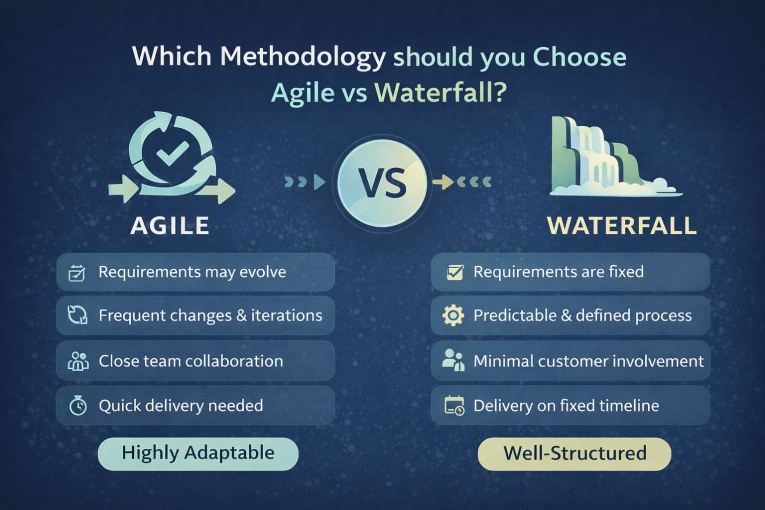
The right choice depends on how your project works, not on which method is more popular.
Choose Agile if:
- Your requirements may change over time
- You want fast and frequent releases
- Regular user feedback is important
- Your team can work closely and adapt quickly
Agile works best for startups, software products, and evolving projects.
Choose Waterfall if:
- Requirements are clear and fixed from the start
- You have a strict budget and timeline
- Heavy documentation is required
- Changes are unlikely
Waterfall is better for government projects, contracts, or compliance-driven systems.
Closure
Now that you understand how agile and waterfall work, the choice becomes much simpler. There is no single ‘best’ methodology for every project.
Agile is ideal when change is expected, feedback is frequent, and speed matters.
Waterfall is the better choice when requirements are fixed, timelines are strict, and documentation is critical.
Lastly, the right decision depends on the project size & your requirements. Choose the approach that supports your goals. Not that sounds popular.